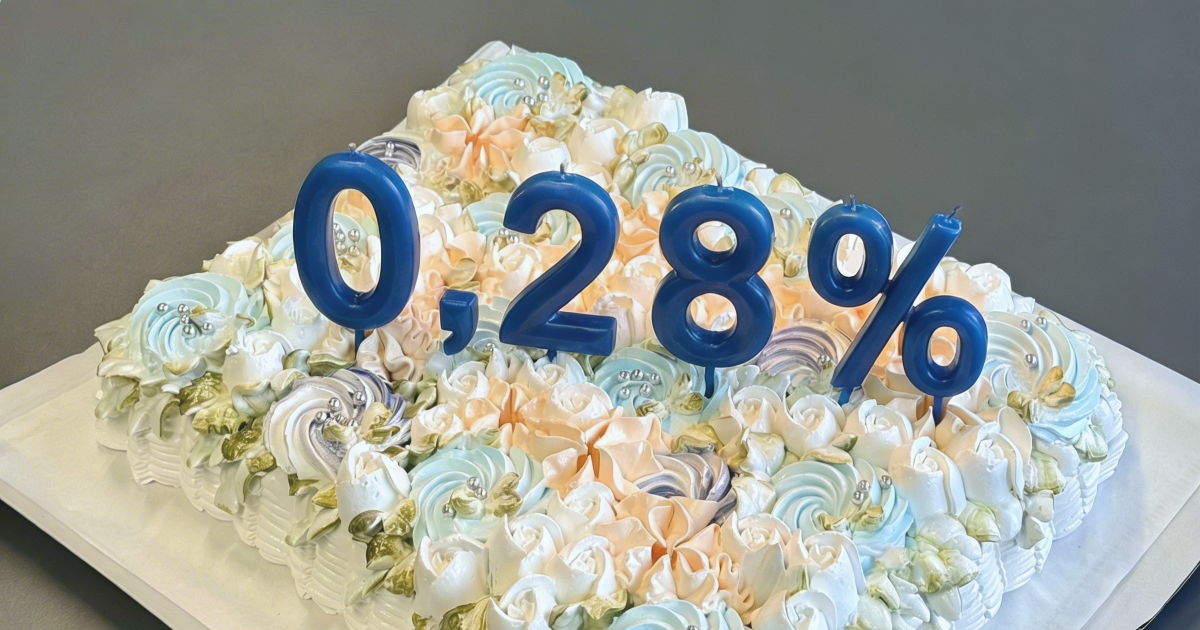
Starting February 27, fees for all Tuleva funds have dropped to 0.28%. We lower our fees as soon as possible — whenever we can cover the costs of fund management at a lower rate. This time, the reduction was made possible by switching our depositary bank, which allowed us to lower our expenses.
Investing is a volume-based business. We can usually lower our fees when our assets under management have grown enough to spread costs across a larger pool of capital
The more of us there are saving together in Tuleva, the lower the cost per investor. This is the core of the Tuleva model.
Why are we lowering fees right now?
In addition to the growth in assets, this fee reduction is driven by a change in our pension funds’ depositary bank, which helped us cut costs. (1) A depositary is a bank that holds the fund’s securities and settles transactions. This ensures that our investors’ assets are always kept safe and separate from the fund manager’s own assets.
While Swedbank previously held our pension funds’ assets, SEB will be doing so moving forth. Since the depositary switch was already on the horizon at the beginning of the year, we launched our new Tuleva Additional Investment Fund (Täiendav Kogumisfond) directly with SEB.
As the depositary fee is one of our main variable costs, reducing it directly lowers the total cost of the funds. In Tuleva’s model, lower costs mean lower fees for all our savers.
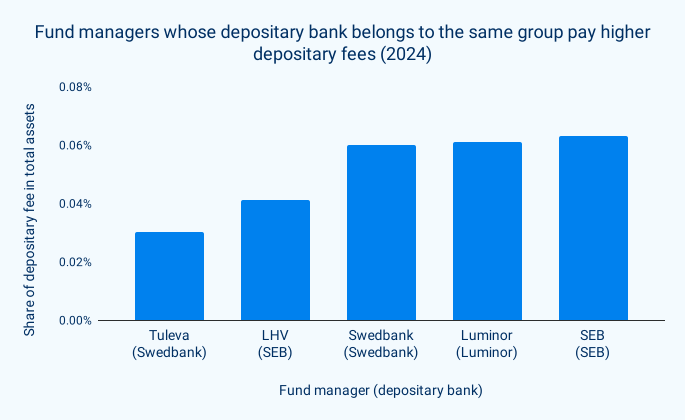
Notably, our depositary fees were already among the lowest compared to other fund managers. Paradoxically, depositary fees are nearly twice as expensive in cases where the depositary bank belongs to the same group as the fund manager.
In connection with the depositary change, we also updated our pension funds’ key documents (terms and conditions, prospectuses, and key information). This does not change anything within the funds’ investment portfolios.
Tuleva fees are consistently falling
We aren’t pressured to lower fees by the state or by competitors. Tuleva’s owners are the same people who grow their wealth in our funds. We all have a direct interest in keeping costs under control. Furthermore, all our savers pay the same fee equally. We don’t offer a low fee in one fund at the expense of customers paying more in another.
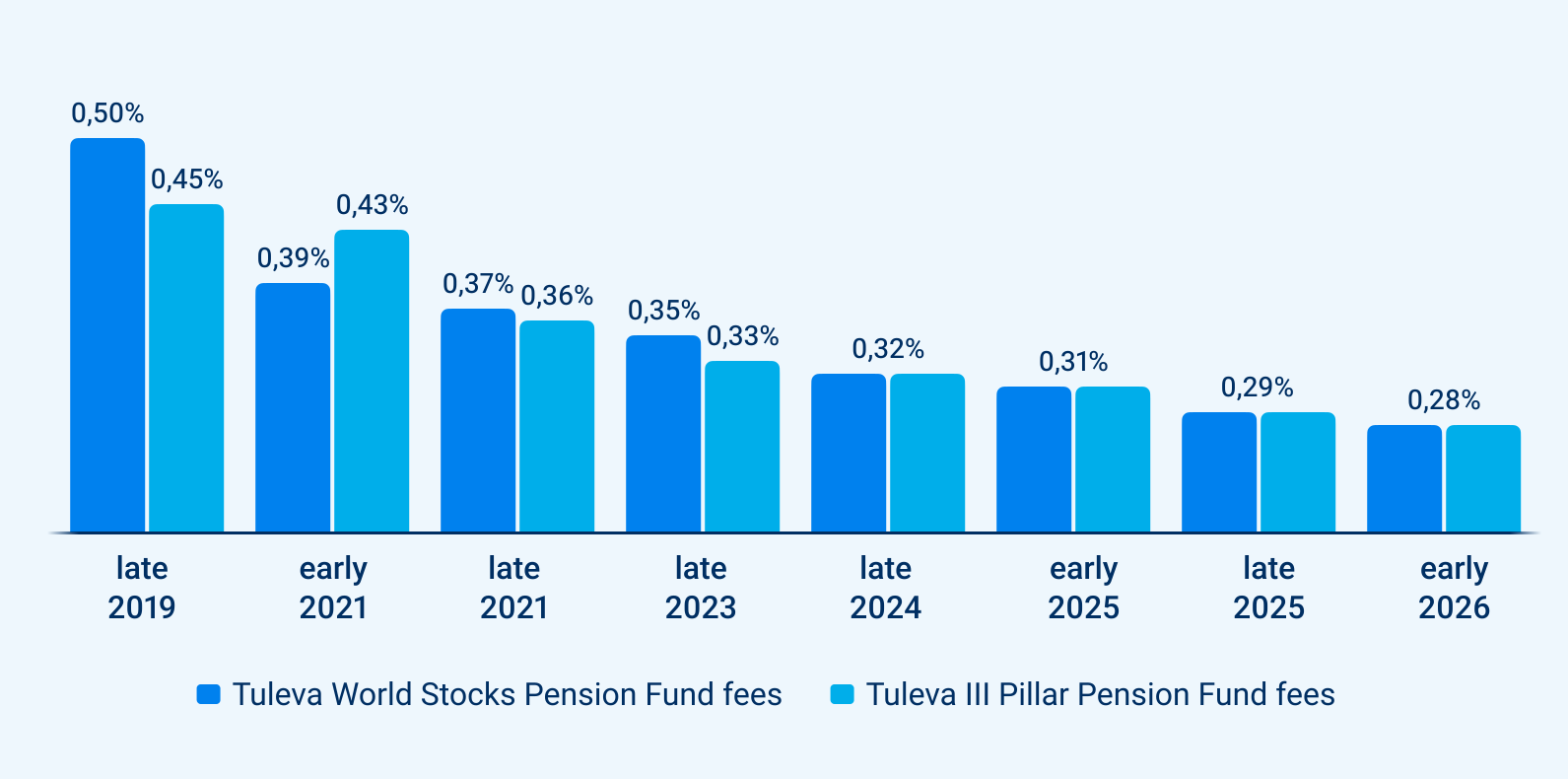
Unfortunately, data shows that Estonian pension fund fees, in general, are slow to decline. Because Tuleva is not a typical company, we can take a different stance: every time our costs decrease or efficiency grows, we pass that benefit on through lower fees.
Lowering fees is not a planned marketing campaign for us; it is the natural result of our business model. The more efficient our cost structure becomes and the more our assets grow, the more confidently we can continue lowering fees in the future.
The lower the fees, the more remains for the saver
A simple rule applies to investment funds: the less you pay in fees, the more of the returns earned by the assets stays with you. (2) Therefore, lowering fees is essentially the only thing that is guaranteed to improve your wealth’s performance.
Pension fund fees may seem like small percentages, but their impact is long-term. As investors, it is vital to track the ongoing charges of a fund, which reflects the total cost. For example, for every €10,000 saved, you will now pay €28 per year in Tuleva funds, compared to €47 to €157 in some of the banks’ actively managed or life-cycle funds. (3) Over decades, these tens of euros in annual difference translate into tens of thousands of euros in your pension account.
See and compare how much you are paying in fees on your pension assets.
Log in to your pension account
- We previously managed to lower depositary costs and fund fees in autumn 2023. The depositary fee is just one part of our variable costs; we keep a “hawk eye” on all other expenses and constantly look for ways to reduce them whenever reasonable.
- See, for example, the Morningstar analysis.
- The easiest way to compare II pillar fund fees is on the Pensionikeskus website.
